Estate & Trusts - Robert M. Crites & Associates
Robert M. Crites & Associates

You Have Questions...
...We Have Answers
Robert M. Crites
Attorney at Law
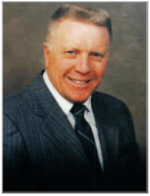
Robert M. Crites & Associates
You Have Questions...
...We Have Answers
Robert M. Crites & Associates
Over 25 Years Experience
Free Consultation
(810) 252-9185
Robert Crites & Associates
Main menu:
ESTATE & TRUSTS
PROBATE AND ESTATE PLANNING
When a person contemplates the end of life, one of the issues they often think about is how their assets will be distributed in the event of their death and how they can make sure that their intentions in that regard are carried out in a reasonably quick fashion that is relatively inexpensive and that does not result in a dispute that creates anger and hard feelings among their heirs, typically their children.
There are various legal instruments familiar to competent lawyers that can be used to achieve those goals. I will describe a few:
1. A simple Will can be worded to cover several contingencies: it can designate the person you want to wind up the decedent’s affairs. That person will determine what assets are owned by the decedent alone at the time of death, determine what outstanding bills are owed and pay them, and distribute the rest of the assets to those people who are designated as beneficiaries in the Will. The person who does this is called a Personal Representative and is given the power to sell property, collect money from bank accounts, file tax returns, etc. so that he/she can do the things listed above, after which the estate is closed. The Personal Representative is appointed by the Probate Court after the Will is determined to be valid and admitted to Probate. Wills can cover all types of contingencies, such as the death of a child before the death of both parents. That child may or may not leave children of his/her own surviving who may or may not be authorized in the Will to inherit his/her parents’ share. Some of the deceased parent’s children may be in great need of financial aid while others are self sufficient, which may influence the parents with regard to the size of each child’s inheritance. If the parents die at a very young age, they might have minor children and the parents may not want their children to receive their entire inheritance at age 18, but do want them to have those assets available as they grow up taking into consideration the child’s needs and other sources of income, such as Social Security benefits which such children are often entitled to. All of these considerations and dozens, if not hundreds, of others can be addressed in a Will in such a way that it will not have to be changed in the event of the death of a spouse/(parent) or a child, etc.
2. Very often people express a desire to avoid Probate Court involvement. They typically do not want to involve the Probate Court in the transfer of their property because they believe it is a complicated and expensive process. In most instances it is neither provided the heirs get along with one another. There are, however, other ways to transfer property that are simpler and, as with the utilization of a Will, allow the deceased person to keep complete control over his/her property until they die. We often recommend and utilize these methods in my office.
a. Bank and stock accounts can be designated, “pay on death,” and the person who is going to get whatever is in the account has no ownership of it or control over it until the person who owns the bank account or stock dies. Property subject to that designation does not pass through Probate and the transfer is effective upon presentation of a valid death certificate of the deceased person.
b. With regard to real estate, the same thing can be accomplished with what is known as a Lady Bird deed. The deed is signed by the owner or owners, who retain complete control over the property during their lifetimes. If they were to sell or mortgage the property, they would have the sole right to the proceeds that was obtained by doing so. In the event the person or persons who signed the Lady Bird deed still own the property at their death, it passes to the person listed on the deed as the subsequent owner, and the property does not pass through Probate.
3. Sometimes trusts are utilized to transfer property and sometimes they are a good fit, typically when there are minor children who might inherit, and the parents want the children’s caregiver to have access to funds in the accounts for the benefit of the children while they are young. For most people, however, they are an unnecessary expense that unnecessarily complicate the transfer of assets at death.
POWER OF ATTORNEY WITH MEDICAL PROVISION
As people age they worry about and prepare for the disposition of assets in the event of their death and also have concerns about how their financial affairs and medical decisions will be handled in the event they are physically and/or mentally unable to do so. Some are concerned about and express a desire not to have their lives prolonged by artificial medical means if they were to become unconscious and/or unresponsive with no realistic hope of recovery. For that reason when people come into my office to talk about Wills and other means of transferring property upon death as described above, we often also discuss the need for a Power of Attorney that typically would have a medical provision. The Power of Attorney confers the power to manage financial affairs (do banking, pay bills, file tax returns, etc.) and the medical power confers the power to make medical decisions in the event that the person who grants the power cannot do so. The person who is granted the power to handle the financial affairs and/or make the medical decisions must sign acknowledgment that they understand their duties and that they cannot self deal and must make all decisions in a manner most beneficial to the person who grants the power, i.e., the disabled person.
LIVING WILL
A Living Will specifies the mental and or physical conditions under which the person who signs the Will wishes life support to be discontinued. Spouses and children are often called upon to make these decisions, and it gives them comfort to know that what they decide is in conformity with the desires of the person whose life is terminated. The Living Wills usually require a certification by doctors that the life of the person who they are caring for cannot be extended in a way that they would be able to consciously interact with other people or be responsive in any normal way.
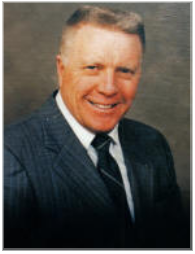
Robert M. Crites
Attorney at Law
FREE CONSULTATION
NO CHARGE UNLESS WE ACCEPT YOUR CASE AND WIN IT
FLINT OFFICE
1030 S. Grand Traverse
Flint, MI 48502
OFFICE HOURS
Mon-Fri 9am-12pm & 1:30pm-5pm
(810)252-9185
E-Mail: criteslaw@sbcglobal.net
SWARTZ CREEK OFFICE
9001 Miller Road
Swartz Creek, MI 48473
OFFICE HOURS
Tues & Thurs 7:30pm-9pm